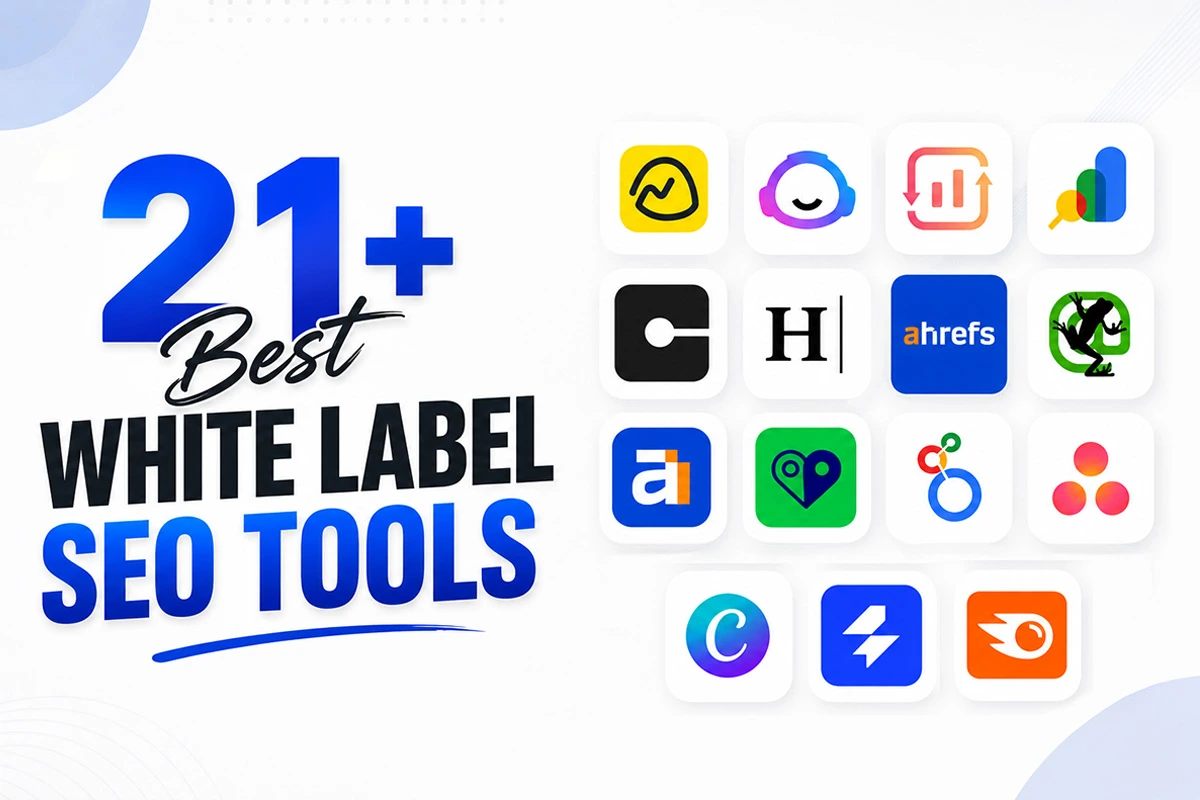
Choosing the wrong tools for SEO can slow down the delivery process. Therefore, it is crucial to carefully choose the White-Label SEO stack. While choosing the Best White-Label SEO tools for your business, consider two things: tools that can be used inside your agency, and tools that can be used to show clients the ongoing progress under their brand’s name.
At the end, the goal for the best White-Label SEO tools for agencies is common: early detection of errors, improved decision-making, and enhanced visibility. This guide highlights the best SEO tools for agencies in 2026.
The List Of Top White-Label SEO Tools in 2026
Keyword Research and Strategy
Good keyword research tools support intent, competitor gaps, location data, and prioritisation. Here are the top choices:
Ahrefs
Ahrefs Keywords Explorer finds keyword ideas, search intent, current results, and competitor gaps. It helps separate quick opportunities from topics that need stronger content or authority first.
Semrush
Semrush suits larger research projects with suggestions, competitor terms, intent filters, difficulty data, and topic planning. It is practical when the agency needs to turn a seed term into a content or landing-page plan.
SE Ranking
SE Ranking offers keyword suggestions, related and long-tail terms, competitor queries, and keyword grouping. Its cleaner workflow makes it useful for agencies that want solid research without giving every team member a complex enterprise platform.
Mangools
Mangools’ KWFinder keeps keyword research simple. It combines keyword suggestions with SERP analysis and is particularly useful for smaller accounts, local campaigns, and long-tail opportunities where the team needs a fast answer rather than a large research environment.
Google Keyword Planner
Google Keyword Planner plays a crucial role in SEO. It helps to discover related phrases, compare locations, and show demand and commercial signals. Treat its volumes as estimates, not exact organic-search forecasts.
On-Page SEO
On-page SEO tools are useful for reviewing page structure, titles, headings, internal links, relevance, and gaps against competing pages. Check out the top choices on on-page SEO below:
SE Ranking
SE Ranking’s On-Page SEO Checker compares a target page with leading competitors and creates a list of fixes. Agencies can use it to review metadata, content, links, user experience, and indexing factors before assigning clear actions to writers or developers.
Semrush
Semrush On Page SEO Checker turns competitor and site data into page-level recommendations. It works well when an agency wants to identify existing URLs with improvement potential instead of creating a new article for every keyword.
Surfer SEO
Surfer’s Content Editor is used for the comparison of drafts with the pages in search results. After comparison, it shared recommendations that help in improving the rankings.
Technical SEO
A reliable technical SEO tool stack should cover Google data, full-site crawling, performance, and structured-data testing. The best technical white label SEO tools are:
Google Search Console
Google Search Console shows how Google sees a verified website. Its indexing, enhancement, sitemap, security, and URL inspection reports reveal pages Google cannot access or understand and help confirm fixes.
Screaming Frog SEO Spider
Screaming Frog tool is used to check the on-page SEO errors. It can help to find broken links, redirects, canonicals, metadata, internal links, JavaScript rendering, structured data, and migration checks.
Semrush
Semrush Site Audit is a practical choice for scheduled monitoring across several client websites. It groups technical findings by severity and covers crawlability, performance, internal linking, HTTPS, and international SEO, making recurring checks easier to manage.
PageSpeed Insights
PageSpeed Insights is used to check the speed performance across computers and smartphones. It helps with Core Web Vitals investigation for improving the page performance.
Google Rich Results Test
Google’s official tool is the rich results test, often described as a schema markup testing tool. It checks a URL or code sample to show which Google rich results the structured data may support and highlights errors that should be corrected before release.
Content Creation and Optimization
For Content creation and optimization, use the AI tool that has accuracy. The best White-Label SEO tools are
Semrush On Page SEO Checker
Best suited for pages already earning impressions but underperforming. It combines page and competitor data to recommend improvements across content, semantics, links, technical elements, and UX, helping agencies spot refresh opportunities before commissioning another article on the same topic.
Surfer SEO
Surfer SEO helps writers compare a draft with pages already competing for the target query. Its Content Editor highlights related topics, terms, headings, and coverage gaps while the page is being written. A strong editor uses Surfer to notice missing ideas, then adds original examples, experience, and a point of view that competing pages do not already have.
Jasper
Jasper White-Label SEO tool is also ideal for executing repetitive content and brand tasks. It can be used for creating a marketing campaign under multiple brands with numerous rules and approval requirements. Jasper supports campaign sign, copy, brief, content, scaled production, and repurposing.
ChatGPT
With ChatGPT, an SEO agency can turn business notes into outlines. It helps to explore angles, change weak sections, and improve content structure. However, for efficient outcomes, original research, clear instructions, and fact-checking are non-negotiable.
Claude
Claude works well with long briefs, source material, and complex drafts. It can compare information and spot gaps, while strategic choices and factual approval remain with the writer.
Copy.ai
Copy.ai suits repeatable workflows more than one-off prompts. Teams can connect research, text generation, and other actions to speed up briefs, repurposing, product content, and campaign support.
Hemingway Editor
Hemingway Editor is a final-stage clarity tool. It flags hard-to-read sentences, passive wording, adverbs, and complicated vocabulary, while Editor Plus can suggest fixes. It is useful for keeping expert content readable without stripping away necessary detail.
Image and Video Creation and Optimization
Images and videos improve explanation and engagement, but oversized media can slow the page. Agencies need one tool to create branded assets and another to deliver those assets efficiently.
Canva
By using Canva, an SEO agency can create graphic content such as images, social media assets, and presentations without requiring technical knowledge. This White-Label SEO tool also assists with video creation through shared templates.
Smush
Smush contributes to WordPress image optimization. It helps to compress and resize media content and supports formats such as WebP or AVIF. This reduces the manual efforts involved in keeping image-heavy sites fast.
Off-Page SEO and Link Building
Off-Page SEO and Link-building tools help agencies to discover new opportunities, track records, and handle client relationships. The best tools are:
Ahrefs
With Ahrefs Site Explorer, agencies can find out the competitor backlinks, linked pages, content, anchors, and referring domains. It can be used to select the linkable assets and prospect types before outreach begins.
Semrush
Semrush covers the gap between backlink research, link-building prospects, and auditing. It suits agencies that want to move from competitor discovery to outreach planning without exporting every stage into a separate system.
Moz
Moz is useful for quick authority and link comparisons. Its link metrics can support a decision. However, for the effective usage of this White-Label SEO tool, agencies should also examine topic relevance, real traffic, editorial quality, and the page where a link may appear.
BuzzStream
BuzzStream is a white-label SEO tool that businesses can rely upon to keep prospect details, conversations, follow-ups, and relationship history in order. It proves most valuable for teams running genuine manual outreach, where knowing who last contacted a publisher and how it went helps prevent careless or repeated emails.
Local SEO
Local campaigns require accurate business information, review management, listing coverage, and location-level rankings. General SEO suites often miss the street-by-street detail needed for a strong local strategy.
Google Business Profile
Google Business Profile decides how an eligible local brand actually shows up on Google Search and Maps. Agencies get to manage hours, contact details, categories, photos, posts, and reviews, and even hand out user access, all without ever asking the client for their password.
BrightLocal
BrightLocal brings local rank tracking, grid views, listings, citations, reviews, audits, and agency reporting into one platform. It is useful for proving where visibility is improving around a client’s real service area rather than relying on one city-wide ranking.
Moz Local
Moz Local is designed for managing location information, listings, and reputation work across multiple platforms. It is a sensible option when an agency’s main concern is keeping business data consistent and reducing manual updates across many locations.
Rank Tracking
Rank tracking shows movement, not business success. Agencies should use it to diagnose visibility changes and then connect those changes with landing-page traffic, leads, and conversions.
Looker Studio
Looker Studio takes connected data and turns it into reports clients can actually explore. By connecting GA4 and Search Console, businesses can explore the journey from impressions to clicks to conversions on one page.
SE Ranking
SE Ranking monitors positions by search engine, location, device, and competitor. Its agency dashboards suit teams tracking many projects without rebuilding the same monthly report.
Ahrefs
Ahrefs Rank Tracker follows desktop and mobile positions across locations and compares visibility with competitors. It fits agencies already using Ahrefs for research and backlinks because ranking changes can be reviewed alongside the wider competitor picture.
Semrush
Semrush Position Tracking provides daily monitoring for organic and paid results, including local positions and SERP features. It is useful for campaigns where the client needs a clear view of visibility changes across devices, locations, and competing domains.
Backlink Monitoring and Auditing
Backlink monitoring answers a different question from link research. It checks whether earned links remain live, whether the profile is changing, and whether suspicious patterns need closer human review.
Ahrefs
Ahrefs lets teams review new and lost links, referring domains, anchors, linked pages, and competitor changes. Regular checks can uncover broken targets, lost placements, and pages that are steadily attracting authority without outreach.
Semrush
Semrush Backlink Audit reviews link quality signals, groups suspicious links, monitors new or lost backlinks, and supports removal or disavow workflows. Its toxicity labels should start an investigation, not make the final decision automatically.
SE Ranking
SE Ranking’s Backlink Monitor tracks link status, referring domains, anchors, target pages, and dofollow or nofollow changes. Email alerts are useful for agencies responsible for keeping paid, earned, or partner placements active.
Analytics and Traffic Tracking
Clients rarely buy rankings for their own sake. They want qualified visitors, enquiries, bookings, and revenue. SEO analytics tools should connect search visibility with what people do after they reach the website.
Google Analytics 4
GA4 collects website and app activity and provides reports for traffic, users, engagement, events, and business outcomes. Agencies should configure meaningful events and conversions before using the data to judge SEO performance.
Google Search Console
Businesses can use Google Search Console to count clicks, impressions, CTR, average position, queries, pages, countries, and device data straight from Google Search. It remains the best first-party source for spotting which pages are gaining or losing organic exposure.
Looker Studio
Businesses can count on Looker Studio to turn connected data into interactive, shareable reports. Connecting this with GA4 and Search Console shows the full path from impressions to clicks to conversions, without clients hopping between products.
Client Management and Workflow
SEO retainers involve research, writing, design, development, approvals, reporting, and client communication. A clear workflow prevents important work from disappearing inside email threads.
Asana
Asana is a white-label SEO tool that businesses can rely upon to manage deadlines and handoffs. It suits agencies handling multiple client requirements at once. One shared template keeps everything aligned, while owners and due dates remain clearly visible.
Basecamp
With Basecamp, agencies can bring s tasks, schedules, files, and client chats into a single space. Its simpler structure works well for agencies that want clients involved without exposing them to a complicated internal operations system.
AI Search, GEO, and AEO
GEO and AEO tools show the brand mentions and citations. The best White-Label SEO tools for AIO, AEO, and SEO are:
Semrush AI Visibility Toolkit
Semrush’s AI Visibility Toolkit tracks mentions, citations, prompts, competitors, sources, sentiment, and technical blockers across AI-search platforms. Agencies can use it to find topics where competitors are repeatedly cited and build a clearer plan for improving brand visibility.
Ahrefs Brand Radar
Ahrefs Brand Radar monitors brand visibility across AI answers and other discovery channels. It is especially useful when the agency already relies on Ahrefs, because AI mentions can be reviewed alongside competitor, content, and backlink information.
How to Build the Right White Label SEO Tool Stack?
The best white label SEO tools are those that match your services, client volume, team skills, and reporting commitments.
A sensible starting stack often includes:
- One broad SEO platform for research and competitive analysis
- Google Search Console and GA4 for first-party performance data
- A dependable technical crawler
- A project-management system
- A reporting layer that can carry your agency’s branding
Specialist tools can then be added when a clear gap appears.
Buying everything at once does not create a better process. It often creates several versions of the same number, and no agreement about which one should guide the strategy.
What to Check Before Choosing an SEO Tool?
Before committing to a new platform, look beyond the feature page. Here is how to decide on choosing a White-Label SEO tool.
- First, check whether the team will use it regularly. A sophisticated tool that only one employee understands can become a bottleneck rather than a solution.
- Next, look at how the information fits your existing workflow. Can findings become tasks? Can reports be shared clearly? Can data be exported or connected to the client dashboard? Can access be controlled as accounts change hands?
- Cost also needs to be judged against client delivery, not marketing promises. An expensive platform may still be efficient when it replaces several manual processes. An affordable tool can become costly when the team spends hours cleaning exports or explaining unreliable information.
- Most importantly, decide who owns the judgment. SEO platforms produce scores, warnings, forecasts, and recommendations. They do not know the client’s margins, internal priorities, legal restrictions, sales process, or brand risk. Those decisions still belong to the agency’s experts.
Final Thoughts
The best white label SEO tools for agencies are not the products with the longest feature lists. They are the tools that improve decisions and make client delivery easier to understand.
A sensible starting stack includes one broad SEO platform, Google Search Console and GA4, a technical crawler, a workflow system, and a branded reporting layer. Add specialist software only when a clear delivery gap appears.
When it comes to the ranking, Google recommends original value, clear sourcing, useful analysis, and evidence of expertise. Therefore, always choose the software that helps experienced people think better rather than trying to replace their judgment.
Build a Stronger White-Label SEO Process via viaENS
viaENS helps agencies scale white-label SEO without building a large in-house outreach team. With 12+ years of experience in off-page SEO, digital PR, and organic link building, we manage publisher research, outreach, content placement, and backlink delivery behind the scenes. Our network of 20,000+ publishers across 30+ industries supports SaaS, B2B, local, and international campaigns. Agencies stay in control of strategy, approvals, reporting, and client communication, while our specialists handle execution. From monthly link building to AI search brand mentions, viaENS delivers relevant, high-quality placements that strengthen authority and visibility. Partner with viaENS for long-term search growth under your agency’s trusted brand and name.